
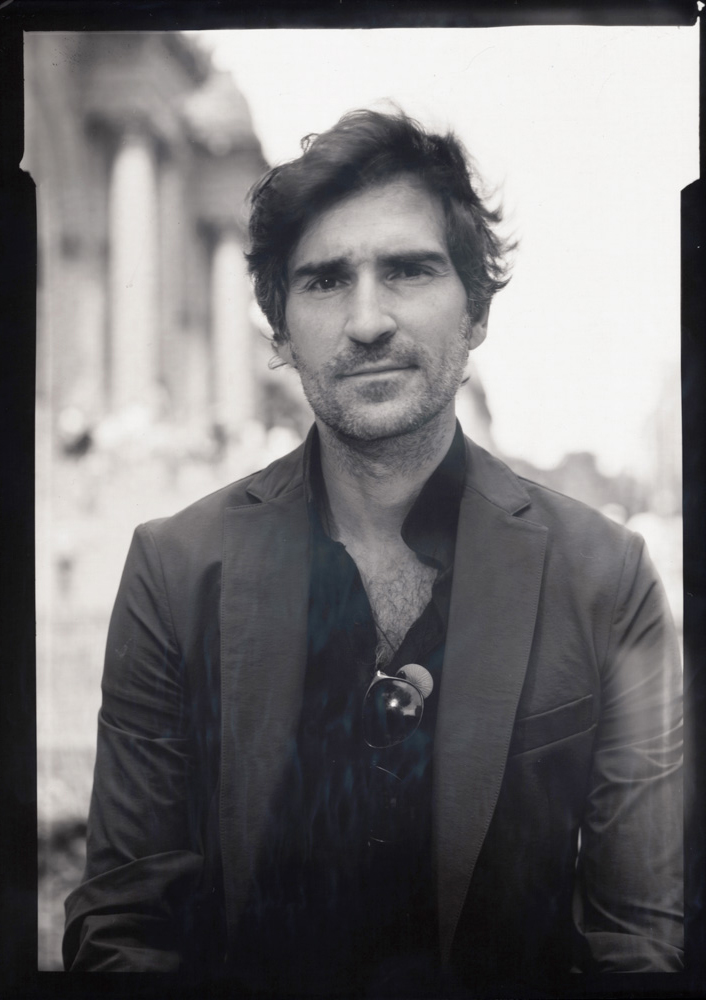
Joan Bofill Amargós (Barcelona, 1982) is a visual artist and filmmaker whose work unfolds through long-term investigations into people, cultural memory and the ways individual lives shape our understanding of the world. Working across painting, sculpture, documentary film and writing, he approaches these disciplines as complementary ways of exploring a shared question: how can another person’s experience be truly understood?
Driven by a fascination with biography, conversation and observation, Bofill develops projects over several years through sustained research and direct encounters with his subjects. Rather than producing conventional portraits or documentaries, his work translates ideas, memories and creative thought into visual experiences.
His projects include Double Portrait, an ongoing exploration of portraiture as a shared act of attention; Raymond Roussel: Le Jour de Gloire; and The Hanging of Stuart Cornfeld, a multidisciplinary project combining documentary film, monumental painting and sculpture.
His work has been presented internationally through exhibitions, screenings and publications, and is held in private collections.